Tooth decay is a disease that damages and breaks down teeth
Your teeth have a hard, outer layer called enamel (e-NAM-ul); a middle layer, called dentin; and a center, which contains the nerves and blood vessels, known as the pulp chamber.
Tooth decay can affect each layer of your tooth, and the more layers that are affected, the worse
the damage.
What causes tooth decay?
Your teeth are covered by a sticky film of bacteria called plaque (pronounced PLACK). When plaque is left on your teeth, the bacteria in the plaque use sugar in food and drinks to make acid. This acid attacks your tooth enamel. Eventually, your enamel can break down from these acids and cavities can start to form. Once a cavity forms, it can’ be reversed. Cavities can only be treated and repaired by a dentist, usually with a filling.
If tooth decay is not treated, you may feel pain, the infection can spread to other parts of your mouth, and you may even lose teeth. People with tooth pain may have trouble eating and sleeping and may miss days of work or school.
If not treated, tooth decay can cause an abscess (pus-filled sac) and can lead to other serious infections.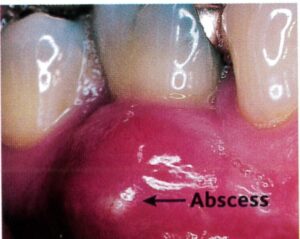
Signs and symptoms of tooth decay
You may not notice any signs or symptoms at all, so it's important to see your dentist regularly. He or she will examine your teeth and take x-rays if needed.
Common places where decay forms
Tooth decay often occurs between teeth and in the grooves of back teeth, where bits of food collect. Toothbrush bristles often do not get into these grooves. Back teeth are also harder to keep clean because they are not as easy to reach. Another place decay can form is at the tooth root. Cavities there may go below the gumline.
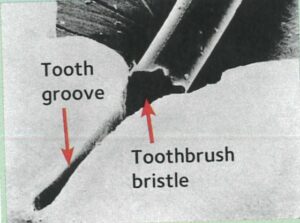
Even a toothbrush bristle is too ig to reach inside a groove in the tooth (magnified).
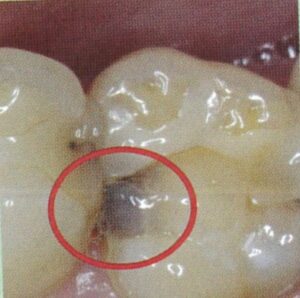
Tooth decay can form under fillings.
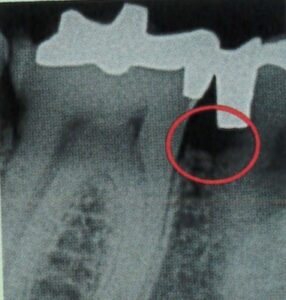
X-ray of tooth with decay under a filling.
People of all ages can get tooth decay
Your risk may increase if you:
The bacteria that cause tooth decay can also be passed from one mouth to another by kissing, sharing a cup or spoon or anything else that carries saliva. For this reason, you should not share toothbrushes with anyone.
Treating tooth decay
Treatment depends on the size and location of the decay. Your dentist can explain what treatment is best, depending on how much the decay there is.
For decay that is caught early, a fluoride (FLOOR-eyed) treatment may be all
that is needed. Fluoride is a natural mineral that can help protect your tooth
enamel and reverse early signs of decay.
What you can do to lower your risk of tooth decay
